About Me
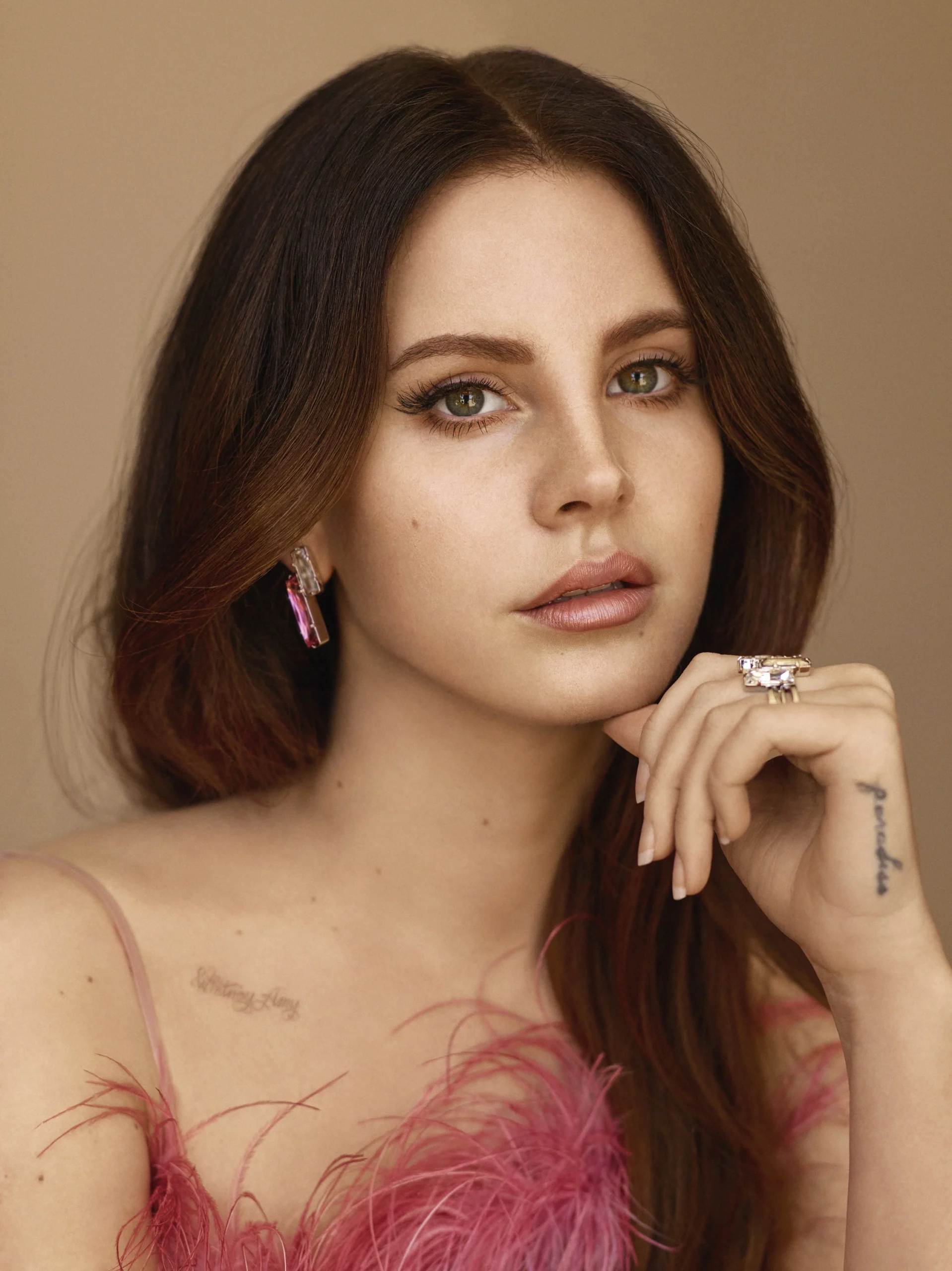
Elizabeth Woolridge Grant, better known by her professional name Lana Del Rey, is an American singer-songwriter known for her cinematic quality, poetic lyrics, and unique voice. The thematic content of her music includes glamorous and romantic motifs such as love, loss, solitude, fame, and the American Dream. Del Rey creates songs that feature the vintage atmosphere and imagery inspired by pop culture and Americana of the 1950s through the 1970s eras. Albums like Born to Die, Ultraviolence, Norman Fucking Rockwell!, and Did You Know That There’s a Tunnel Under Ocean Blvd have made her famous worldwide.
Lana Del Rey
Lana Del Rey is an American singer-songwriter celebrated for her cinematic music, poetic storytelling, melancholic atmosphere, and nostalgic portrayal of romance and American culture. Born Elizabeth Woolridge Grant, she created a distinctive musical identity by combining alternative pop, dream pop, rock, folk, blues, country, and orchestral influences. Her songs frequently explore love, heartbreak, loneliness, fame, freedom, memory, self-destruction, and the complicated mythology of the American dream.
With her instantly recognizable voice and carefully developed visual style, Lana Del Rey has become one of the most influential artists of her generation. Her music often references classic Hollywood, roadside motels, vintage automobiles, California beaches, old movies, tragic romances, and American popular culture from the 1950s through the 1970s. Although her work frequently looks toward the past, she has created a sound that feels personal and unmistakably modern.
Early Life
Elizabeth Woolridge Grant was born on June 21, 1985, in Manhattan, New York City. She grew up primarily in Lake Placid, a small village in upstate New York. The natural landscapes, quiet surroundings, changing seasons, and sense of isolation she experienced there would later influence the atmosphere of her music.
As a teenager, she became interested in singing and songwriting. She learned to play guitar and discovered that she could use a limited group of chords to create many different songs. This realization encouraged her to begin writing original material and performing in small venues.
After finishing school, she spent time living on Long Island and helping with community outreach work. She later attended Fordham University in New York City, where she studied philosophy. During this period, she performed in clubs and bars under several names, including Lizzy Grant.
These early performances allowed her to experiment with her voice, songwriting, appearance, and public identity. Her music was still developing, but the foundations of her later work were already present: emotionally direct lyrics, vintage American imagery, doomed romance, and a fascination with the boundary between fantasy and reality.
Becoming Lana Del Rey
Before achieving international recognition, she released music under her birth name and related stage names. In 2008, she issued the three-track EP Kill Kill as Lizzy Grant. Her early full-length album, Lana Del Ray A.K.A. Lizzy Grant, was released digitally in 2010 but was later withdrawn.
She eventually adopted the stage name Lana Del Rey. The name reflected the glamorous, cinematic, and coastal atmosphere she wanted her music to communicate. “Lana” suggested classic Hollywood elegance, while “Del Rey” contributed to the vintage California feeling that became central to her artistic world.
Rather than functioning as a simple stage name, Lana Del Rey became a complete creative identity. Her music videos, album artwork, fashion, photography, lyrics, and live performances were designed to feel like parts of the same emotional universe.
Breakthrough With “Video Games”
Lana Del Rey’s breakthrough arrived in 2011 with “Video Games.” The song combined restrained piano, strings, slow percussion, and a deep, vulnerable vocal performance. Its lyrics described emotional devotion within a relationship marked by distance and imbalance.
The accompanying homemade-style music video included vintage footage, Hollywood imagery, skateboarding clips, American flags, and scenes of Del Rey singing into a webcam. The video spread rapidly online and attracted international attention.
“Video Games” felt different from the energetic electronic pop dominating the charts at the time. It was slow, intimate, romantic, and deeply melancholic. Its success demonstrated that a quiet and unconventional song could find a large global audience through the internet.
The track remains one of Lana Del Rey’s defining recordings and established many of the themes that would shape her career: glamour mixed with sadness, idealized love, emotional vulnerability, nostalgia, and the darker side of American culture.
Born to Die
Lana Del Rey released her major-label debut album, Born to Die, in January 2012. The record introduced her cinematic sound to a worldwide audience through dramatic strings, hip-hop-influenced beats, atmospheric production, and low, expressive vocals.
The album includes “Video Games,” “Born to Die,” “Blue Jeans,” “National Anthem,” “Summertime Sadness,” and “Dark Paradise.” Each song contributed to a carefully constructed world of luxury, danger, youth, romance, and emotional tragedy.
“Born to Die” presented love as both beautiful and destructive. “Blue Jeans” blended romantic devotion with images of danger and rebellion. “National Anthem” connected relationships with money, power, celebrity, and American symbolism. “Summertime Sadness” became one of her most commercially successful songs, especially after a remix expanded its international audience.
Although early critical reactions were divided, Born to Die developed extraordinary staying power. It continued attracting listeners long after its original release and became one of the most recognizable alternative-pop albums of the 2010s. The Recording Academy has examined its lasting influence on modern pop and the artists who followed Lana Del Rey’s atmospheric approach.
Paradise and “Young and Beautiful”
Later in 2012, Lana Del Rey released Paradise, an extended project that was also combined with her debut as Born to Die: The Paradise Edition. Songs such as “Ride,” “Cola,” “Gods & Monsters,” and “Bel Air” expanded her cinematic storytelling.
“Ride” became particularly important because it explored freedom, loneliness, travel, and the desire to escape conventional life. Its spoken introduction and desert imagery strengthened Del Rey’s connection with American highways, open landscapes, and restless characters.
In 2013, she recorded “Young and Beautiful” for the soundtrack to Baz Luhrmann’s film The Great Gatsby. The orchestral ballad asks whether love can survive aging and the loss of physical beauty. Its themes perfectly matched the film’s world of glamour, insecurity, wealth, and tragic romance.
“Young and Beautiful” became another signature song and demonstrated how naturally Lana Del Rey’s music could function within cinema. Her songs often feel like scenes from films even when they are not created for a soundtrack.
Ultraviolence
Released in 2014, Ultraviolence moved away from some of the hip-hop-influenced production of Born to Die. Working primarily with Dan Auerbach of the Black Keys, Lana Del Rey developed a darker, guitar-driven sound influenced by psychedelic rock, blues, and alternative music.
The album includes “West Coast,” “Shades of Cool,” “Brooklyn Baby,” “Sad Girl,” “Pretty When You Cry,” and the title track. Its arrangements are slower, heavier, and less polished than those of her previous record.
“West Coast” changes tempo between its verses and chorus, creating a dreamlike sense of instability. “Brooklyn Baby” uses humor and self-awareness while referencing underground culture, jazz, poetry, and music-industry stereotypes. “Shades of Cool” builds from a restrained beginning into a dramatic guitar climax.
Ultraviolence helped establish Lana Del Rey as an album-focused artist willing to change her sound rather than repeat the formula of her commercial breakthrough.
Honeymoon
Lana Del Rey released Honeymoon in 2015. The album returned to orchestral arrangements while introducing jazz, noir, dream pop, and classic film-score influences.
Songs such as “High by the Beach,” “Music to Watch Boys To,” “Terrence Loves You,” “Freak,” and “The Blackest Day” create a slow and immersive listening experience. The production allows her vocals and lyrics to remain at the center while strings, keyboards, guitars, and electronic textures build around them.
Compared with the raw guitar sound of Ultraviolence, Honeymoon feels controlled, elegant, and cinematic. It reinforced her reputation for creating albums with consistent moods and carefully connected visual identities.
Lust for Life
Released in 2017, Lust for Life introduced a more outward-looking and occasionally hopeful perspective. While earlier albums often focused on private relationships, this record also responded to social uncertainty and the cultural atmosphere of the United States.
The album includes “Love,” “Lust for Life,” “13 Beaches,” “Cherry,” “White Mustang,” “Summer Bummer,” and “Get Free.” It features collaborations with the Weeknd, Stevie Nicks, Sean Ono Lennon, A$AP Rocky, and Playboi Carti.
“Love” speaks to a younger generation with warmth and encouragement, while “Get Free” expresses a desire to move away from unhealthy emotional patterns. The title track combines Del Rey’s nostalgic style with the Weeknd’s contemporary pop presence.
Norman Fucking Rockwell!
Lana Del Rey released Norman Fucking Rockwell! in 2019. Created mainly with producer and songwriter Jack Antonoff, the album became one of the most critically celebrated projects of her career.
Its songs include “Mariners Apartment Complex,” “Venice Bitch,” “Doin’ Time,” “Cinnamon Girl,” “California,” “The Greatest,” and “Hope Is a Dangerous Thing for a Woman Like Me to Have—but I Have It.”
The album combines piano ballads, folk rock, psychedelic textures, soft percussion, electric guitar, and detailed lyrical observations. Its title references American painter Norman Rockwell while questioning idealized representations of American life.
“Venice Bitch” develops into a long psychedelic arrangement, while “The Greatest” reflects on cultural change, environmental anxiety, technology, and personal loss. “Mariners Apartment Complex” presents its narrator as a source of strength rather than simply a victim of romance.
Norman Fucking Rockwell! demonstrated Lana Del Rey’s growth as a lyricist and helped strengthen her reputation as one of contemporary music’s most important songwriters.
Poetry and Violet Bent Backwards over the Grass
Lana Del Rey expanded beyond conventional albums with Violet Bent Backwards over the Grass, a poetry collection released in 2020. An audiobook version paired her spoken poetry with music by Jack Antonoff.
The poems examine family, relationships, creativity, Los Angeles, memory, and personal transformation. The project revealed that the literary qualities of her songwriting could also stand independently from traditional pop structures.
Chemtrails over the Country Club
Released in March 2021, Chemtrails over the Country Club embraced folk, country, and Americana influences. Its production is quieter and more intimate than much of her earlier work.
The album includes “White Dress,” “Chemtrails over the Country Club,” “Tulsa Jesus Freak,” “Wild at Heart,” “Dark but Just a Game,” and “Yosemite.” Its lyrics reflect on fame, friendship, ordinary life, movement, and the possibility of living outside the expectations attached to celebrity.
“White Dress” looks back on the period before international fame, while the title track contrasts suburban comfort with mystery and unease. The record presents a more reflective version of the American imagery that has always appeared in her music.
Blue Banisters
Only seven months after Chemtrails over the Country Club, Lana Del Rey released Blue Banisters in October 2021. It is one of her most personal albums, combining newly written songs with material developed during earlier periods of her career.
The album includes “Arcadia,” “Text Book,” “Blue Banisters,” “Black Bathing Suit,” “Dealer,” “Thunder,” and “Sweet Carolina.” Family, friendship, public criticism, emotional recovery, and artistic independence are central themes.
Instead of creating a fictional world around every song, Del Rey allowed more autobiographical details to enter the writing. The album therefore feels less like a performance of glamorous mythology and more like a private collection of memories and emotional responses.
Did You Know That There’s a Tunnel Under Ocean Blvd
Lana Del Rey released Did You Know That There’s a Tunnel Under Ocean Blvd in March 2023. The album combines intimate piano writing, gospel, folk, alternative pop, electronic experimentation, spoken interludes, and unexpected shifts in structure.
Notable tracks include the title song, “A&W,” “The Grants,” “Candy Necklace,” “Paris, Texas,” “Let the Light In,” “Fishtail,” and “Taco Truck x VB.”
“The Grants” considers family, memory, and what remains after death. “A&W” transforms from a confessional ballad into an experimental, rhythm-heavy second section. The title track uses a forgotten architectural landmark as a metaphor for the fear of being overlooked or erased.
The album received major Grammy recognition, including nominations connected to Album of the Year, Song of the Year, alternative performance, alternative album, and pop duo/group performance. Her official website continues to feature the project while also highlighting newer material.
Most Popular Lana Del Rey Songs
Across her career, Lana Del Rey has created a large catalogue of recognizable songs. Some of her most popular and influential recordings include:
- “Video Games”
- “Born to Die”
- “Blue Jeans”
- “Summertime Sadness”
- “National Anthem”
- “Ride”
- “Young and Beautiful”
- “West Coast”
- “Brooklyn Baby”
- “High by the Beach”
- “Love”
- “Lust for Life”
- “Mariners Apartment Complex”
- “Venice Bitch”
- “Doin’ Time”
- “Cinnamon Girl”
- “The Greatest”
- “Chemtrails over the Country Club”
- “Dealer”
- “A&W”
- “Say Yes to Heaven”
- “Let the Light In”
These songs represent different sides of her work, from orchestral pop and dramatic romance to psychedelic rock, folk, piano ballads, and experimental songwriting.
Lana Del Rey Albums
Her principal studio albums are:
- Lana Del Ray A.K.A. Lizzy Grant — 2010
- Born to Die — 2012
- Ultraviolence — 2014
- Honeymoon — 2015
- Lust for Life — 2017
- Norman Fucking Rockwell! — 2019
- Chemtrails over the Country Club — 2021
- Blue Banisters — 2021
- Did You Know That There’s a Tunnel Under Ocean Blvd — 2023
Important additional projects include the Paradise EP and the poetry collection and spoken-word album Violet Bent Backwards over the Grass.
Awards and Recognition
Lana Del Rey has received major recognition for her songwriting, albums, videos, visual identity, and cultural influence.
She won the BRIT Award for International Breakthrough Act in 2012 and International Female Solo Artist in 2013. The official BRIT Awards archive confirms both victories. BRIT Awards 2012 and BRIT Awards 2013
In 2023, Billboard honored her with the Women in Music Visionary Award, recognizing her artistic influence and long-term contribution to contemporary music. Billboard Women in Music Visionary Award
In 2024, she received the Special International Award at the Ivor Novello Awards. The Ivors Academy praised her songwriting career, influence, and success in the United Kingdom. The Ivors 2024 winners
Lana Del Rey has earned 11 Grammy nominations. These include recognition for projects such as Lust for Life, Norman Fucking Rockwell!, and Did You Know That There’s a Tunnel Under Ocean Blvd, as well as songs including “Norman Fucking Rockwell” and “A&W.” Although she has not yet received a Grammy win, her repeated nominations across major and alternative categories reflect the industry’s recognition of her songwriting and album-making.
Musical Style and Influences
Lana Del Rey’s music is often described as alternative pop, dream pop, baroque pop, indie pop, folk, rock, and Americana. However, no single label fully describes her work.
Her lower vocal register gives many songs a calm, intimate, and mysterious character. She also uses breathy higher notes, layered harmonies, spoken phrases, and dramatic changes in tone. Her arrangements may include piano, strings, electric guitar, acoustic guitar, orchestral percussion, electronic beats, samples, and ambient sound.
Her lyrics draw inspiration from poetry, cinema, religion, family history, relationships, American geography, and popular culture. She frequently combines references to famous people and recognizable places with private memories. This allows her songs to feel both personal and mythological.
Interesting Facts About Lana Del Rey
- Her birth name is Elizabeth Woolridge Grant.
- She performed as Lizzy Grant before adopting the name Lana Del Rey.
- “Video Games” became her international breakthrough in 2011.
- Her visual style is strongly influenced by vintage Hollywood and American culture.
- She has written songs for major films, including “Young and Beautiful” for The Great Gatsby.
- She released a poetry collection titled Violet Bent Backwards over the Grass.
- She frequently collaborates with producer and songwriter Jack Antonoff.
- Her music has influenced a new generation of alternative and mainstream pop artists.
- She is known for treating albums as complete artistic worlds rather than collections of unrelated singles.
- She has received 11 Grammy nominations, two BRIT Awards, Billboard’s Visionary Award, and an Ivor Novello Special International Award.
Influence and Legacy
Lana Del Rey changed the direction of modern popular music by proving that slow, melancholic, literary songs could achieve mainstream success. Her influence can be heard in artists who use intimate vocals, atmospheric production, emotionally complicated lyrics, and carefully developed visual storytelling.
She also helped reshape the public image of the modern singer-songwriter. Her work combines personal confession with character creation, allowing listeners to question where autobiography ends and artistic mythology begins.
From the homemade video for “Video Games” to the expansive songwriting of Norman Fucking Rockwell! and the experimentation of Did You Know That There’s a Tunnel Under Ocean Blvd, Lana Del Rey has continued to develop without abandoning the emotional qualities that first defined her music.
Her songs remain appealing because they acknowledge that beauty and sadness can exist together. She writes about romance without ignoring disappointment, fame without hiding its loneliness, and nostalgia without pretending that the past was perfect.
Lana Del Rey’s combination of poetic songwriting, cinematic production, vintage imagery, and emotional honesty has created one of contemporary music’s most recognizable artistic identities. Her albums continue to attract devoted listeners, inspire other musicians, and reward audiences who return to discover new meanings within her carefully constructed world.